Australia is roughly the same size as the contiguous United States. Almost none of it is easy.
From Perth on the Indian Ocean to Sydney on the Pacific, the road distance is about 4,000 kilometers, or 2,500 miles. Between those two cities lies the Nullarbor Plain, one of the flattest and most remote stretches of land on the planet. It has no trees, almost no towns, and a single two-lane highway running ruler-straight across red limestone for hundreds of miles.
Here is how long it takes to cross on a bike.
The quick answer
| How you ride | Daily distance | Time to cover ~4,000 km (2,500 miles) |
|---|---|---|
| Relaxed touring rider | 60 km / 37 mi per day | about 67 days (nearly 10 weeks) |
| Comfortable touring rider | 80 km / 50 mi per day | about 50 days (7 weeks) |
| Strong touring rider | 100 km / 62 mi per day | about 40 days (6 weeks) |
| Fast endurance cyclist | 150 km / 93 mi per day | about 27 days (4 weeks) |
| Brisk walker for comparison | 15 miles / 24 km per day | about 167 days (nearly 6 months) |
Those numbers assume steady riding days and minimal rest days. In practice, most touring cyclists take one rest day every five to seven riding days. Add those in and a comfortable crossing lands somewhere between eight and twelve weeks.
The challenge is not just distance. It is the heat (summer temperatures in the outback regularly exceed 40 degrees Celsius), the wind (a headwind on the Nullarbor can pin you to 8 km per hour), and the nearest town sometimes being 200 or 300 km away. Riders carry several days of food and water. A rear flat tire in the middle of nowhere is a problem you need to be ready to solve alone.
For a comparison crossing by foot, see how long it would take to walk across Australia – the same 2,500-mile route on foot takes five to eight months. For the full global circumference, how long it would take to walk around the world shows how Australia fits into the bigger picture.
The Indian Pacific Wheel Race
The Indian Pacific Wheel Race, held every two years, is one of the hardest self-supported ultra-cycling events in the world. The route runs from Fremantle (the port suburb of Perth) to Sydney via the Nullarbor, covering approximately 5,500 kilometers (about 3,420 miles). No support crew, no staged checkpoints with food waiting, no set rest schedule. Riders navigate and manage everything themselves.
Kristof Allegaert, a Belgian ultra-endurance cyclist and physician, is one of the event’s most dominant riders. He completed the route in under 10 days, averaging roughly 550 kilometers per day. That means riding for most of each 24-hour period with only a few hours of sleep. At that pace, the Nullarbor Plain takes roughly two days to cross.
For perspective: a touring cyclist covering 80 km a day would need about 69 days for the same 5,500-kilometer IPWR route. The gap between a world-class ultra-endurance rider and a recreational tourist is not about fitness so much as the willingness to suffer without stopping.
The Nullarbor: 91 miles without a curve
No story about biking across Australia skips the Nullarbor. It is the section people describe for years afterward.
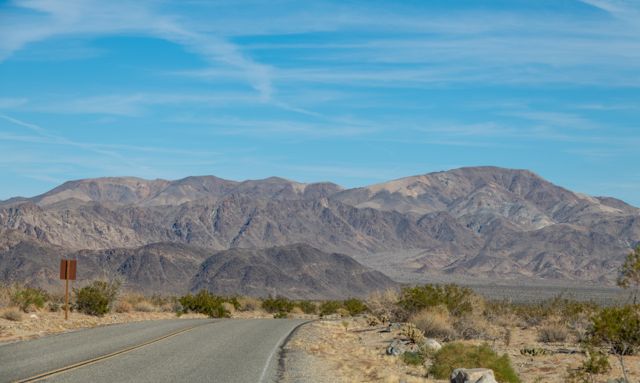
The Eyre Highway crosses the Nullarbor Plain for about 1,200 km. For one continuous 146-kilometer (91-mile) stretch, the road runs in a perfectly straight line without a single bend. It holds the record as one of the longest straight stretches of paved road in the world. There is nothing on either side except flat, dry scrub to the horizon.
Cyclists say two things about this section. One: it looks like you are making no progress. The road ahead looks identical to the road an hour ago. Two: the solitude is intense enough that it changes how you think. People who expected to hate it often say it became the part they remember most.
Water taps and basic campsites appear roughly every 200 km along the highway. Riders typically carry 10 to 15 liters of water between stops during summer and time their riding for early mornings before the heat peaks.
Breaking the crossing into legs
Perth to Sydney breaks naturally into four sections, each with its own character:
| Leg | Approximate distance | Character |
|---|---|---|
| Perth to Norseman | about 720 km (450 miles) | Farmland and wheat belt, manageable roads |
| Norseman to Ceduna (Nullarbor) | about 1,200 km (745 miles) | The remote crossing, red limestone plain |
| Ceduna to Port Augusta | about 470 km (290 miles) | Wheat fields, Spencer Gulf, more services |
| Port Augusta to Sydney | about 1,550 km (960 miles) | Murray River country, Blue Mountains, final descent |
The last leg from Port Augusta to Sydney is longer than it looks on a map. The Blue Mountains west of Sydney add serious climbing after hundreds of flat kilometers. Many riders say the final push into Sydney is harder than the Nullarbor because they have used up their reserves.
For the Pacific Coast alternative, some cyclists take a coastal route south through Melbourne, adding about 500 km but trading desert for ocean views and more regular services.
Covering the distance without crossing an ocean
A Perth-to-Sydney crossing is 2,500 miles. That number becomes interesting when you think about shared effort.
If a family of five each contributes an average of 5 miles a day – a morning walk, a lunch run, a bike commute – the group covers 25 miles together. At that pace, 2,500 miles takes 100 days. Three months and ten days, shared across five people spread across different cities and time zones.
The miles do not have to be cycling. A retired parent in Tucson walking the dog in the morning, a college student in Portland running three times a week, a spouse biking to work in London: all of it counts. The goal does not care how the distance happened.
| Group size | Average per person per day | Time to 2,500 miles |
|---|---|---|
| A couple | 5 miles each | about 250 days |
| A family of 4 | 5 miles each | about 125 days |
| A family of 6 | 5 miles each | about 83 days |
| A group of 10 | 5 miles each | about 50 days |
Trek Together handles the routing, the math, and the shared map. Everyone invites each other with a link, picks the route, and watches the shared marker inch east across the continent.
For the longer version – around the whole world by bike – see how long it would take to bike around the world.
Why the scale matters
We are on a small planet. Australia, one of the more remote and self-contained landmasses on it, can be crossed by a person on a bicycle in six to ten weeks. The whole world – every ocean excluded, every continent chained together – is reachable in one to two years of steady riding.
Dave, who built Trek Together and is in his 70s, keeps coming back to the same thought: you have roughly a hundred years here, and your legs will carry you a long way if you keep using them. Life is short. Ride as far as you can.
A distance challenge gives that a shape. The Nullarbor Plain does not have to be literal. The miles do.
Trek Together is an iPhone app for shared journeys on real maps. Pick a route, invite the people you care about, and every mile each of you covers moves you forward together. 7-day free trial, then $4.99/month.